Okt
When choosing a leather bag, most attention naturally goes to the leather.
But the hardware matters too.
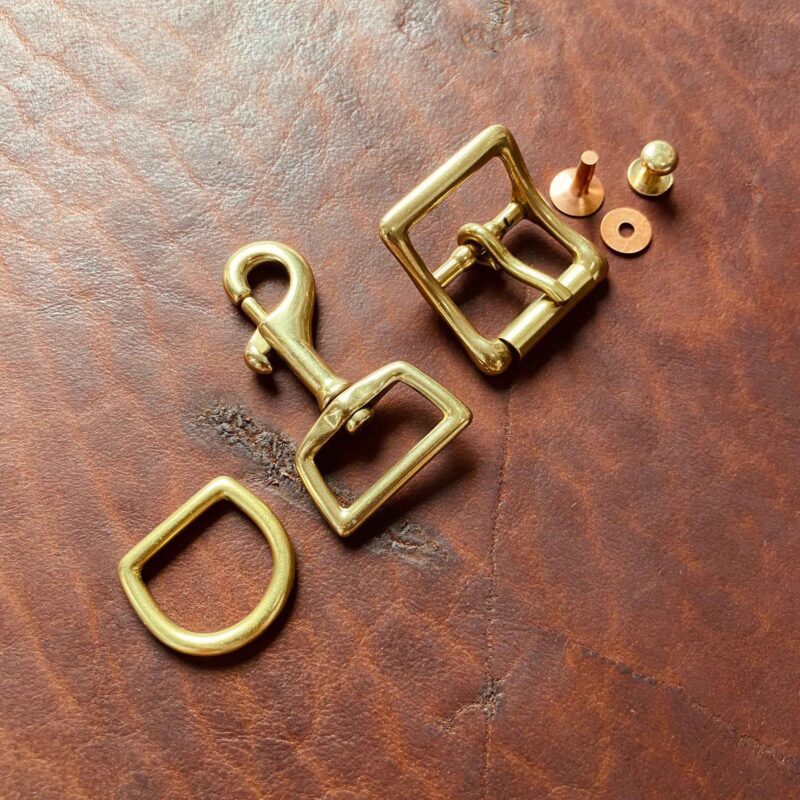
Buckles, rings, snaps, rivets, and clasps are handled, pulled, rubbed, and exposed to the elements throughout the life of a bag. For a product designed to be used for years, these small components can become important points of durability.
At Walklo, we prefer hardware that can age alongside the leather rather than simply trying to remain looking new.
That is why we use brass hardware on selected leather goods.
What Is Brass?
Brass is an alloy primarily made from copper and zinc. It has been used for centuries in hardware, fittings, tools, instruments, and other objects where durability and a warm appearance are valued.
One important distinction is that brass-colored hardware is not necessarily solid brass.
Some hardware uses another base metal with a brass-colored plating or coating. Solid brass, by contrast, is made from brass throughout the component.
This difference becomes more noticeable as hardware wears.
Brass vs. Zinc Alloy Hardware
Zinc alloy is widely used in mass-market bags and accessories. It is economical, highly suitable for casting, and can be produced in many shapes and finishes.
That does not mean zinc alloy is inherently bad. Well-made zinc alloy hardware can perform perfectly well.
The difference is often in the quality of the alloy, casting, finishing, and manufacturing process.
With lower-cost hardware, there can be greater variation in quality. Depending on the component and finish, potential problems can include uneven plating, discoloration, surface corrosion, brittle parts, or moving components that become loose after repeated use.
Brass takes a different approach.
Solid brass is generally more expensive, but the material itself has a warm appearance and can develop a natural patina through use.
The distinction becomes particularly relevant when the surface wears.
With plated hardware, heavy friction can eventually wear through the finish and expose the underlying material. With solid brass, you are still wearing brass.
The goal is not to choose the most expensive material. It is to reduce unnecessary failure points.
Why Brass Works Well With Leather
Leather changes through use.
It develops scratches, softens, darkens, and gradually develops its own patina. Brass can do something similar.
New brass has a relatively bright, warm appearance. Exposure to air, moisture, skin oils, and everyday handling can gradually make its surface darker and more subdued.
Frequently touched areas may remain brighter, while less exposed areas can darken.
The result is not perfectly uniform—and that is part of its character.
A bag that is used every day develops a visual history. The leather records where it has travelled, while the hardware records years of handling.
Brass Develops Patina
Patina is the gradual change that occurs on the surface of a material through time and exposure.
On brass, this can mean a darker, warmer, or more muted appearance.
There is no single “correct” brass patina.
Two bags made at the same time can eventually look different depending on how often they are used, where they travel, and how they are handled.
You can polish brass if you prefer its brighter appearance, but you do not have to. Many people simply allow the surface to develop naturally.
For us, that is part of the appeal.
Why We Choose Brass
Hardware may be one of the smallest parts of a leather bag, but it contributes to how the entire product ages.
We choose brass because its material behavior fits the way we believe a long-term leather product should behave:
- Durable: suitable for repeated handling and everyday use.
- Timeless: its warm appearance works naturally with leather.
- Maintainable: the surface can be cleaned or polished when desired.
- Made to develop character: it can change naturally rather than simply losing a decorative finish.
We do not use brass simply because it looks traditional.
We use it because we want the hardware to age with the product.
Made to Age, Not to Be Replaced
A leather bag does not need to remain pristine to remain valuable.
The scratches, softened leather, darker edges, and changing hardware can become part of its history.
Leather develops character.
Brass develops patina.
Together, they create a product that can become increasingly personal with time.
Don’t keep it new. Keep it going.
Leather goods made for work, travel, and the years ahead.
Designed to take marks.
Built to develop character.
Made to go the distance.


