Knowledge, Leather Care, Leather Type
Why Does Leather Develop Patina?
Nov
A new leather bag has a certain look. The colour is fresh, the surface is relatively uniform, and the material has yet to reflect the life of its owner.
Over time, that can change.
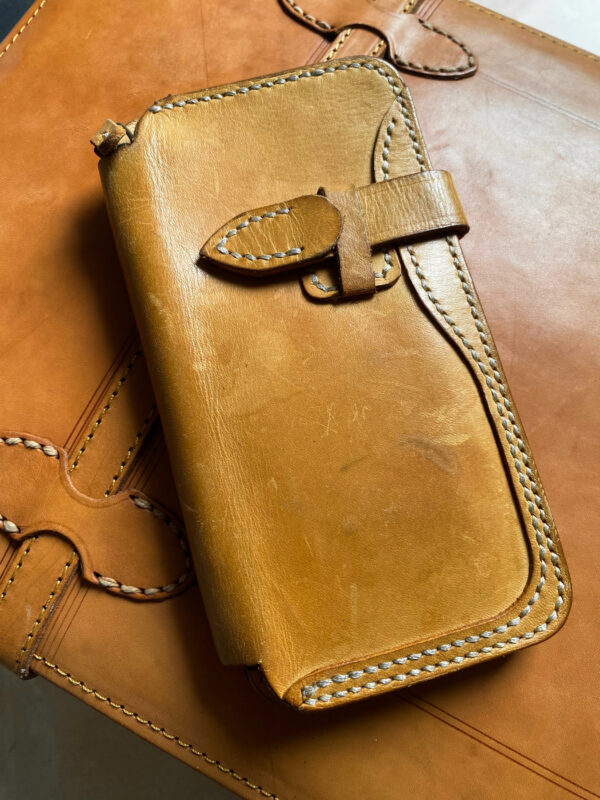
The leather may become darker, develop a subtle sheen, or show variations in colour around the handles, edges, and areas that receive the most contact. These gradual changes are commonly known as patina.
For people who appreciate leather goods made to last, patina is part of what makes a well-used bag distinctive. But why does it happen, and does all leather develop it in the same way?
What Is Leather Patina?
Patina is the gradual change in a material’s appearance through use and environmental exposure.
On leather, it can appear as deeper colour, a softer sheen, subtle tonal variations, and marks that develop through handling. These changes are influenced by the leather’s composition, tanning process, surface finish, and everyday use.
Patina is not simply a sign of wear. When it develops naturally on suitable leather, it can add character without necessarily indicating damage.
However, scratches, stains, peeling finishes, and cracking are not automatically patina. Some changes are cosmetic, while others may indicate deterioration.
What Causes Leather to Develop Patina?
Several factors work together to influence how leather ages.
1. Light and exposure
Exposure to daylight, including ultraviolet radiation, can gradually change leather colour. Some vegetable-tanned leathers darken noticeably with exposure, particularly those that begin with a light, natural tone.
The effect varies by dye, tanning process, and finish. Excessive direct sunlight can also cause unwanted fading or drying, so deliberately leaving a bag in harsh sunlight is not necessary.
2. Natural oils and handling
Everyday contact transfers small amounts of oil, moisture, and residue onto leather. Areas that are handled frequently, such as wallet corners, bag handles, and closure points, may darken or develop a sheen sooner than less-used areas.
This is one reason a leather item gradually develops a distinctive appearance based on how its owner uses it.
3. Friction and repeated use
Repeated contact and movement can smooth the surface in certain areas. Edges may soften, handles may become more supple, and frequently touched sections may develop a subtle polish.
These changes contribute to the overall appearance of aged leather.
Why Some Leather Develops More Patina Than Others
Not all leather ages in the same way.
Vegetable-tanned leather is particularly associated with pronounced patina, especially when it has a relatively natural, lightly finished surface. Its colour can deepen considerably with exposure and use.
Chrome-tanned leather can also develop character, but the changes may be more subtle. Its behaviour depends on the formulation and finish, just as it does with vegetable-tanned leather.
Surface treatment matters too. An aniline or lightly finished leather generally allows more visible changes than a heavily pigmented or coated surface, which is designed to maintain a more consistent appearance.
This is why tanning method and surface finish should be considered together. Neither vegetable tanning nor full-grain classification alone guarantees a particular patina.
The original colour, dyes, oils, waxes, and finishing treatments all influence the result.
Does Patina Mean Better Quality?
Not necessarily.
Patina can be an attractive characteristic, but it is not a universal measure of leather quality. A well-made leather product should also be judged by its material selection, construction, intended use, and ability to withstand everyday handling.
Some people prefer leather that changes visibly over time. Others prefer a consistent colour and a more uniform finish. Both are valid preferences.
The important thing is understanding what to expect from the material before choosing a product.
How to Let Leather Age Naturally
If you appreciate patina, the best approach is straightforward:
- Use the leather regularly and allow changes to develop naturally.
- Keep it away from prolonged exposure to harsh sunlight and excessive moisture.
- Wipe away dirt with a soft, dry cloth.
- Apply a suitable leather conditioner sparingly when needed, following the manufacturer’s guidance.
- Avoid applying excessive oils or conditioners simply to accelerate darkening, as these can cause uneven colour changes or oversaturation.
Patina develops through a combination of material properties, use, and time. It cannot be predicted precisely or reproduced identically from one item to another.
Made to Develop Character
A leather bag does not have to look exactly as it did on its first day to remain valuable.
Its changing colour, softened edges, and subtle surface variations can reflect years of work, travel, and everyday use. Each item develops differently because no two owners use their belongings in exactly the same way.
At Walklo, we appreciate materials that can change with use rather than being valued only for their original appearance.
Leather develops patina. Brass develops its own surface character. Together, they can become part of a product’s history.
Don’t keep it new. Keep it going.
Leather goods made for work, travel, and the years ahead. Designed to take marks. Built to develop character. Made to go the distance.


